
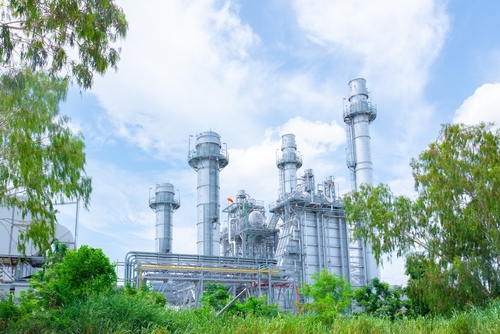
Pennsylvania’s turbulent foray into the Regional Greenhouse Gas Initiative reduced investment in the state’s electricity generation, resulting in a loss of energy projects and billions of dollars in revenue, according to a new analysis from the Commonwealth Foundation.
“The Keystone State’s six-year on-again, off-again relationship with RGGI is a cautionary tale for other states, such as Virginia. RGGI is a tax on every user of electricity, toppling the energy future of every state it touches,” said Elizabeth Stelle, vice president of policy for the Commonwealth Foundation.
“In the six years under RGGI, Pennsylvania lost between $5 billion and $8 billion in investment in our energy sector,” she said in a written statement on May 4. “The commonwealth lost enough electricity to power the entire Pittsburgh metro area.”
The Regional Greenhouse Gas Initiative, or RGGI, is a multi-state cap-and-trade program among eastern states that sets regional limits on carbon dioxide emissions, requiring fossil fuel power producers to buy at auction allowances to cover their emissions.
Emissions targets are reduced over time, with the idea that the program gives power producers a financial incentive to invest in cleaner technology. Revenue from RGGI is intended to be used by states for efforts such as renewable power and energy efficiency.
Six years after attempting to enter the RGGI, Pennsylvania withdrew late last year after the courts ruled that the program represented an unconstitutional tax on producers and legislators voted to end the state’s participation.
The issue of power plant development is significant today as increasingly tight power supplies are being blamed for increasing consumer electricity rates and anticipated use by data centers is forecast to drive up power demand even further while growth in supply struggles to keep pace.
The Commonwealth Foundation report said during Pennsylvania’s effort, developers who had proposed billions of dollars in new power generation capacity during the Marcellus Shale natural gas boom stopped developing new projects, while few of the existing proposals reached operation.
The new report authored by Joshua Schubert, Energy Policy Analyst at the Commonwealth Foundation, says during “Pennsylvania’s RGGI Odyssey,” new generation proposals fell 38 percent and projects powered by natural gas “collapsed by 65 percent.”
Natural gas is a considerably cleaner-burning fuel than coal or oil, and Pennsylvania has huge reserves.
At the same time, the list of projects in neighboring Ohio – which is not a participant in RGGI – increased.
“While Pennsylvania debated, litigated, and delayed over carbon tax policy, Ohio provided developers with a predictable regulatory environment to commit billions in capital,” Stelle said. “Projects in Pennsylvania were cancelled as the project pipeline in Ohio boomed.”
Pennsylvania attempted to enter RGGI in 2019 with an executive order from Gov. Tom Wolf. Legislative Republicans and the industry fought the effort in court, saying it represented an unconstitutional tax.
The state’s involvement ended in November 2025 when the legislature adopted a budget that extricated the state from the program. The Pennsylvania Supreme Court then in January dismissed the remaining appeals in the matter.
Pennsylvania Gov. Josh Shapiro advocates a state-level program to replace RGGI. The Commonwealth Foundation report, however, argues that it would cost Pennsylvania $157.2 billion and double residential electricity bills.
While Pennsylvania is leaving RGGI, Virginia is re-entering the program, a move that leaves the Commonwealth Foundation perplexed given the rising demand in northern Virginia.
“Pennsylvania’s investment drought under RGGI should be a warning to other states as electricity demand surges,” Stelle said. “Virginia’s re-entry to the program under newly elected Gov. Abigail Spanberger boggles the mind as electricity demand in data center row soars.”