
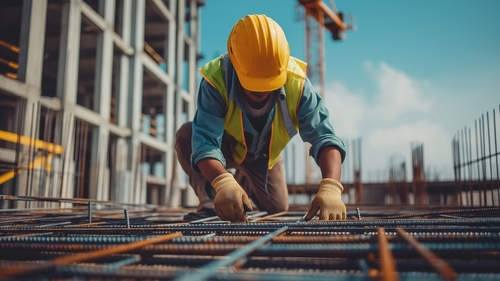
Construction of the largest natural gas-powered energy facility currently under construction in the United States reached a new milestone: the installation of “first steel.”
The Indiana County, Pa.-based Homer City Redevelopment began vertical construction at the Homer City Energy Campus. Also known as “going vertical,” the milestone comes after completion of underground foundation work, and marks a shift in the new gas-insulated switchgear (GIS) building, the first structure to rise on the campus. The steel-framed facility that will house the high-voltage electrical equipment connecting the campus to the PJM grid, the switchgear building is the opening act of a construction sequence that will accelerate in the coming months, officials said.
“As we begin vertical construction, today’s milestone sets us on schedule and continues the journey to delivering new economic opportunities to Indiana County, the state of Pennsylvania, and beyond,” said Corey Hessen, CEO of Homer City Redevelopment, LLC. “In this new phase, our neighbors and partners will begin to see the physical dimension and scale of our project.”
Following the GIS building, the campus will see more construction with tank deliveries, heat recovery steam generator housings, and the assembly of turbine infrastructure tied to the facilities seven high-efficiency advanced class natural gas turbines. Delivery on the turbines is expected next year.
“Kiewit is pleased to mark this transition in the project,” said Brian Reinhart, Vice President of Kiewit Power Constructors Co., a lead contractor in the project. “Beginning above ground construction work with the GIS enclosure structural steel signifies an important step toward successful project delivery. As our skilled craft professional numbers grow each day, our crews remain focused on maintaining a safe and reliable work environment.”
With a workforce of more than 1,000 skilled tradespeople across multiple disciplines, the $1 billion-plus project is eight years in the making. Once completed, the project is expected to exceed the total revenue generated in the final five years of operation by the coal plant the facility will replace.