
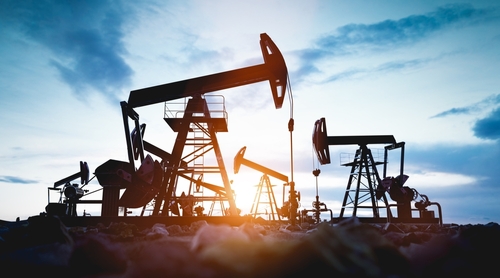
With energy demand surging at home and abroad, the American Petroleum Institute (API) on Jan. 13 brought together top industry executives, policymakers, and market analysts for its annual State of American Energy event, framing a high-stakes debate over how the United States will power its economy — and the world — in the years ahead.
“Here in the United States, we’ve arrived at our own energy inflection point. Multiple forces are converging to drive up energy needs dramatically. New technologies are scaling at extraordinary speed. Supply chains are being rebuilt,” said API President and CEO Mike Sommers during his keynote address. “The next 10 years are shaping up to be the Demand Decade — an era that is going to require historic amounts of new energy.
“Whether our nation can meet that demand will define its trajectory,” he said.
Sommers outlined the policy choices he said will determine whether the United States sustains its energy leadership during the coming decade, and addressed recent geopolitical developments, including in Venezuela, and their implications for global energy markets.
Sommers said the United States is uniquely positioned to meet the moment and that “the state of American energy is strong. There is no nation better positioned to lead in this new era.”
Today, America leads the world in oil and natural gas production, he said, producing more than 13 million barrels of oil per day — more than any country in history.
Sommers also outlined API’s 2026 policy agenda — infrastructure, access, and international competitiveness.
“The United States is the world’s energy superpower — but that status isn’t guaranteed,” Sommers said. “Infrastructure. Access. International competitiveness. Across all three, the priority is the same: durable policy that outlasts political cycles and supports long-term investment, reliability, and growth.”
Sommers pointed to comprehensive permitting reform as the “hinge point” of the Demand Decade and the top energy policy priority of 2026.
“Right now, America has energy in the ground — and demand on the grid — but too often the connection between the two is blocked by red tape, delay and endless lawsuits,” said Sommers.
Against the backdrop of rising global demand, Sommers also addressed recent developments in Venezuela and the conditions required for long-term energy investment.
“Turning reserves into sustained production — whether in Venezuela or anywhere else — requires more than expertise and geology,” Sommers said. “It requires stable governance, rule of law, operational security, physical safety, and long-term investment certainty.”
Sommers concluded by pointing to a growing national consensus around “energy realism.”
“Americans spent years being told they should do less, build less, produce less and pay more. We’re done with that,” Sommers said. “The mainstream has moved decisively toward abundance, affordability, and growth. This is the clearest public consensus we’ve seen in a decade.”
The event also featured a panel discussion with several top energy executives, including Toby Rice, president and CEO of Pittsburgh-based EQT Corp., who explained why permitting reform is critical to building energy infrastructure at the scale and speed needed to deliver affordable, reliable energy to American consumers.
“This administration is rightfully focused on affordability because energy bills for Americans have gone up almost over 40 percent since 2020 — that’s remarkable,” Rice said during the panel. “What’s even more remarkable is that we’ve never produced more energy than what we’re producing right now.
“So how can we have a situation where American energy producers are producing record amounts of energy but Americans’ bills are still going up?” he said. “It’s all about infrastructure and not getting enough infrastructure built.”